
Bespoke Kitchen Design: Layouts and Practicalities Explained
Why Planning Matters in Bespoke Kitchen Design
Planning is essential when designing a kitchen. It helps avoid costly mistakes and ensures your space works both practically and visually for years to come.
A good interior design agency supports you through this process, helping you make informed decisions while visualising different possibilities. At House of Harper, our role is to guide and educate you so you can confidently choose a kitchen that truly works for your home.
Bespoke Kitchen Planning Considerations
Kitchen planning generally falls into three key areas:
1. Planning regulations
2. Best practice
3. Tailored planning
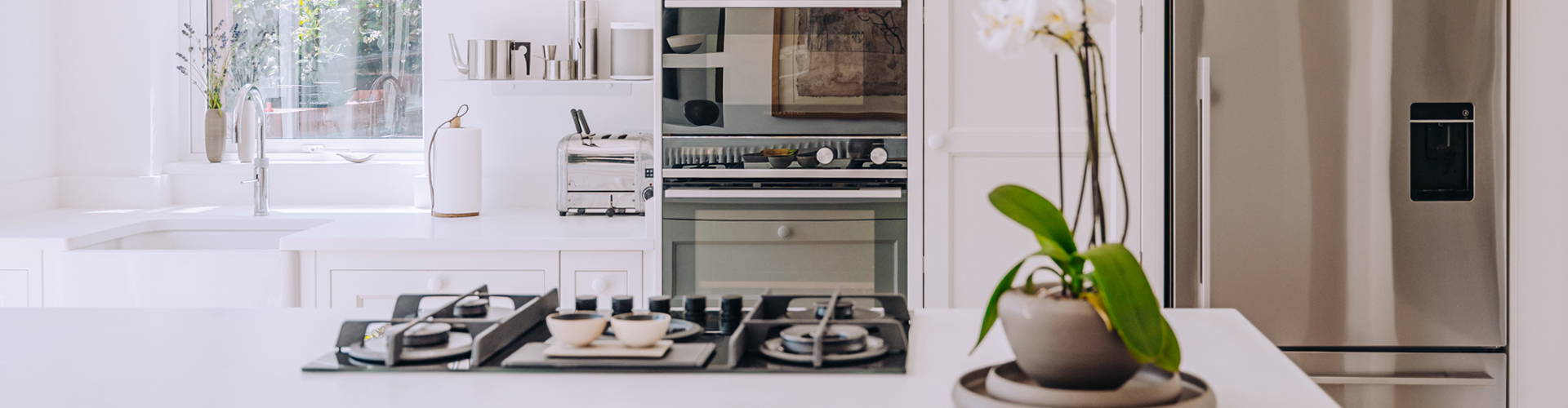
1. Planning Regulations for Kitchen Projects
Planning regulations – sometimes jokingly referred to as “Kitchen Law” – cover the safety rules behind kitchen design.
For example:
-
A gas hob should not be placed directly below an opening window.
-
Electrical sockets should not be positioned behind sinks.
While these rules can sometimes feel restrictive, they exist to prevent avoidable hazards in the home. In smaller spaces, such as compact apartments or shared properties, these regulations can become more challenging, making careful planning even more important.
2. Best Practice in Kitchen Design
Best practice focuses on making your kitchen intuitive, practical and safe to use. Opinions can vary, especially since many homeowners only replace their kitchens every 10 years or inherit existing layouts when they move house.
Because of this, many people may not be aware of how kitchen design has evolved.
Examples of best practice include:
-
Avoiding hobs near windows with long curtains.
-
Ensuring dishwashers are positioned so nearby drawers can still open when the door is down.
These considerations help ensure your kitchen works efficiently and remains easy to use every day
3. Tailoring a Bespoke Kitchen to Your Home
This is where kitchen design becomes truly personal. A bespoke kitchen should reflect your lifestyle, preferences and the unique layout of your home.
Important considerations may include:
-
Base cabinet heights
-
Drawer organisers
-
Shelf positioning
-
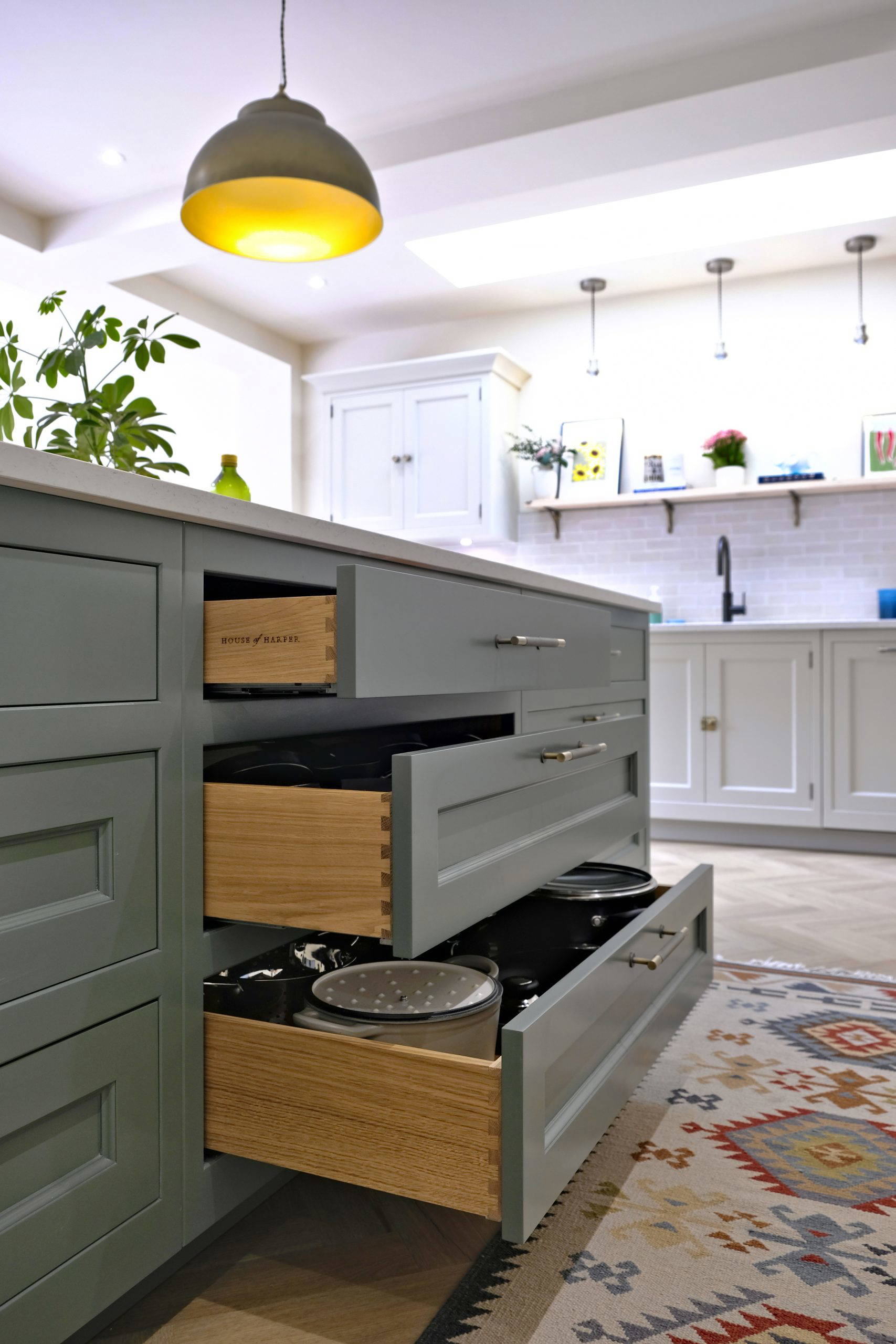
Seating choices such as bar stools, chairs or benches
Great kitchen design balances aesthetics, practicality, safety and lifestyle needs. Since every home is different, a tailored approach ensures the final result works perfectly for you.
Kitchen Design Headaches?
If you’re struggling with layout or planning decisions, the House of Harper team would be happy to help. We’d love to discuss your plans & ideas together — and when it comes to planning your space, there’s no such thing as a silly question.
Email us at: info@houseofharperdesign.co.uk or call 07817 714102 to start planning your dream kitchen today!
"
House of Harper is an impressive yet approachable independent design studio that offers an excellent service. Rhian is a pure delight to deal with - highly knowledgeable with a wealth of experience and an unparalleled passion for design.
She works hard to understand what you need as well as what you want, without ever making it seem like hard work, and has an attention to detail that leaves you feeling thoroughly assured that nothing will be missed. This is very much a business that delivers above and beyond and truly cares about their customers.
Kate
Google Review
Amazing, amazing, amazing! Everything used is 'high end' and the very best of qualities. We're absolutely 'over the moon' and totally 'blown away' by the professionalism and workmanship, from start to finish. An absolutely gorgeous transformation, that will, most definitely enhance our living. House of Harper & Team, you should be so so proud of your achievements. Thank you will never be enough!
Callum McAllister
Google Review
I have to say that House of Harper are one of the best companies I’ve ever dealt with. From the initial consultation to the final quality of our new Kitchen, I can’t fault them. Rhian and her team are reassuringly knowledgeable, they all have extensive backgrounds and experience in the industry and have honed their products and processes as a result of this experience. They are also surprisingly cheaper than the big companies that we all know but I’d say they beat them hands down on quality and the customer experience. This kitchen cost us a lot, and no I haven’t been paid to write this glowing review, I’m just thrilled to have chosen Rhian, and the whole team at House of Harper to work with us in building a kitchen that we’re so proud of. They all deserve immense success in the future.
James Hill
Google Review
I have worked with Rhian on a kitchen in her previous life, and her ability to assess a space and maximise it, in terms of both aesthetics and practicality is outstanding. Rhian takes time to understand the client’s wishes whilst skilfully guiding you, without being at all overbearing. She is delightful to work with and fills you with confidence.I’m now very excitedly awaiting a whole new set of monster cupboards going into a downstairs hallway and landing, plus a bathroom vanity unit. The team have handled the whole process with great skill and professionalism, and I know the quality of workmanship and materials will be second to none. I can’t wait for my next delivery!
Penny Parry-Jones
Google Review
Book An Appointment
Book your free consultation today & take the first step toward your perfect home.
t. +44 (0)1905 347328
e. info@houseofharperdesign.co.uk
House of Harper, 37 The Tything, Worcester, WR1 1JL